
Editorial: TV station megamerger is a threat to First Amendment freedoms
The state of American democracy took another dark turn under the Trump administration this month. The Federal Communications Commission effectively rubber-stamped Texas-based Nexstar Media Group Inc.’s merger with Tegna Inc., creating a broadcast behemoth capable of reaching four in five American television households. The $6.2 billion deal threatens to deprive communities of vital local ...
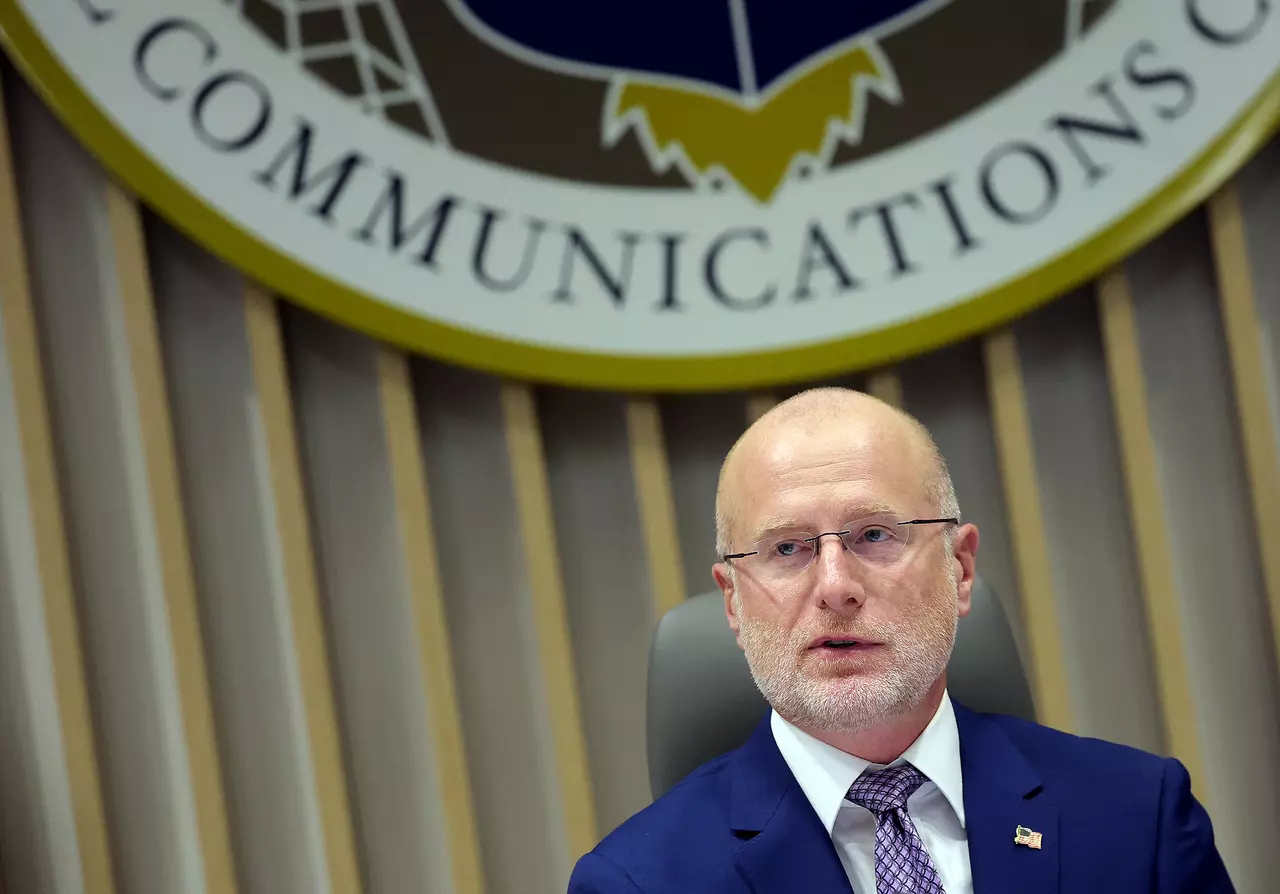
Chairman of the Federal Communications Commission Brendan Carr participates in a FCC meeting at the Federal Communications Commission headquarters on Feb. 18, 2026, in Washington, D.C. The Commission met to discuss oversight of the FCC Lifeline program, broadband deployment on the 900 MHz band, capping noncommercial educational reserved FM band...
Kevin Dietsch/Getty Images North America/TNS
The state of American democracy took another dark turn under the Trump administration this month. The Federal Communications Commission effectively rubber-stamped Texas-based Nexstar Media Group Inc.’s merger with Tegna Inc., creating a broadcast behemoth capable of reaching four in five American television households.
The $6.2 billion deal threatens to deprive communities of vital local journalism as more newsrooms are likely to be gutted in the name of consolidation. Worryingly, it also concentrates more of the country’s media landscape into the hands of President Donald Trump’s allies.
A rule set by Congress in 2004 prevents broadcasters from controlling more than 39% of the American broadcast television market. That prohibition seemed to present no obstacle for FCC Chairman Brendan Carr. The approved merger blows past that figure to an unprecedented 80%, giving Nexstar control of 265 stations across 44 states and Washington, D.C.
Democratic U.S. Sen. Maria Cantwell, the Senate Commerce Committee’s ranking member, opposes the FCC’s approval of the merger. “When one company owns multiple stations in the same city, it merges newsrooms and cuts reporters,” she said.
The merger “was approved behind closed doors with no open process, no full commission vote, and no transparency for the consumers and communities who will bear the consequences,” said Anna Gomez, the FCC board’s lone Democrat.
Amassing this kind of corporate power is a chilling next step toward a state media-like apparatus that bends to presidential pressure and suppresses First Amendment freedoms. Only months ago, Nexstar successfully pressured Disney to suspend late-night host Jimmy Kimmel last September, after Kimmel made comments that angered Trump and Carr. (Carr thanked Nexstar for “doing the right thing” on social media.)
With ever more media concentration, the president need only bully a handful of owners to increasingly shape news coverage as he sees fit. Meanwhile, many more American communities across the country will lose distinct editorial viewpoints and a diversity of coverage, as well as watchdog reporters that monitor the powerful within cities and states. Nexstar has already been busy cutting back staff even before the merger’s approval.
“When broadcast media is owned by a handful of companies, we get fewer voices, less competition,” said California Attorney General Rob Bonta, among eight state attorneys general to file a lawsuit recently to block the merger. “And communities lose the critical check on power that local journalism delivers.”
Washington State Attorney General Nick Brown’s office considered but did not join the suit. A spokesman said they couldn’t make a “substantial argument that (the merger) would significantly lessen competition,” in the state. Nexstar will take over Washington state networks — including KING-TV and KREM of Spokane — and the company will own more than one broadcast media in many markets across the country. In nearby Portland, Tegna-owned KGW-TV is slated to join KOIN-TV and KRCW-TV under Nexstar’s banner.
Still, given the stakes, Brown should consider filing an amicus brief in the matter to amplify opposition to this dangerous consolidation. With fewer journalists and more concentrated media ownership on the horizon, American democracy itself hangs in the balance.
____
The Seattle Times editorial board: members are editorial page editor Kate Riley, Ryan Blethen, Melissa Davis, Josh Farley, Alex Fryer, Claudia Rowe, Carlton Winfrey, Frank A. Blethen (emeritus) and William K. Blethen (emeritus).