Everything You Need to Know About Padel
FotoSCAPE

Everything You Need to Know About Padel

Have you heard of padel? It’s a 2v2 racquet sport that combines elements of squash, handball and tennis, and while it’s been popular in other countries for some time, it’s starting to gain traction in the U.S., as well.
Padel’s Origin

Enrique Corcuera created padel in Acapulco, Mexico, in 1969. The wealthy businessman loved tennis and squash but wanted a slower-paced game. He modified his squash court to incorporate elements of platform tennis. He introduced the game to friends in Acapulco where it became popular locally. Corcuera then took it back to Spain where it spread across the country.

Spreading Popularity

in many places aroud the world, padel’s popularity exploded during the COVID-19 pandemic, because it can be played outdoors and doesn't require any contact. The game is played around the world, and there are more than 70,000 courts worldwide. The International Padel Federation is working to get Padel included in the 2032 Summer Olympics.

The Court

A padel court is about half the size of a tennis court; it measures 66 feet long by 33 feet wide. It’s about 2,178 square feet. A padel court is completely surrounded by walls, much like a squash court is. The back wall of the court is about 13 feet tall; the side walls are stepped from 10 feet to 13 feet tall. The padel net is 3 feet tall.

Equipment

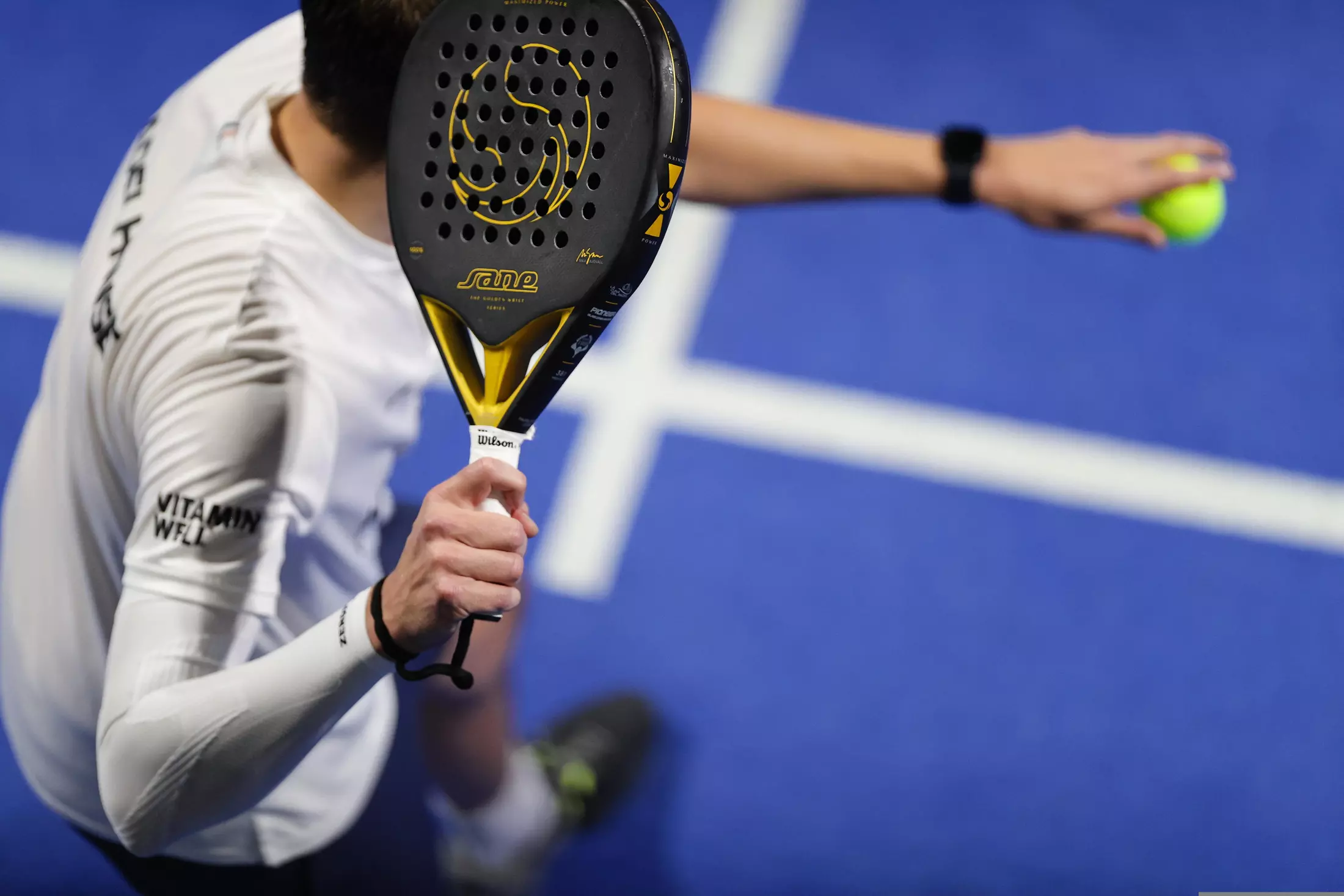
Padel racquets are normally made from carbon fiber or fiberglass. At about 18 inches long, they’re longer than pickleball paddles, which are typically 15-16 inches long. Padel balls are similar to tennis balls but have a lower internal pressure, which means slower ball speed and less bounce.

Scoring

Padel’s scoring system is just like that of tennis. A game is scored the same way: 15/0, 30/0, 40/0, deuce, advantage, etc. A set consists of six games, and a match is three sets. A team scores a point when the opponents’ ball hits the net or another part of the court without the ball having previously bounced in the opponents’ court, if the ball bounces twice in the opponent’s side of the court, or if the ball bounces in the opponents’ side of the court and goes out of bounds.

Padel Vocabulary

Like most sports, padel has its own vocabulary, with most of the slang words being of Spanish origin since the game is so popular in Spanish-speaking countries. Bandeja, for example, is an overhand shot hit with spin rather than power, taken out of the air without letting the ball bounce. Cadete is a behind-the-back shot. A chiquita is similar to a drop shot.

Recommended For You.