
American Airlines' answer for streamlining traffic at DFW is 'less congestion'
American Airlines on Tuesday rolled out a scheduling change that it views as potentially transformative in its push to improve activity at Dallas-Fort Worth International Airport. The airline, which is headquartered in Fort Worth, is adjusting its bank structure at its central hub from nine to 13 banks per day. According to American's Chief Operating Officer David Seymour, a bank structure is ...
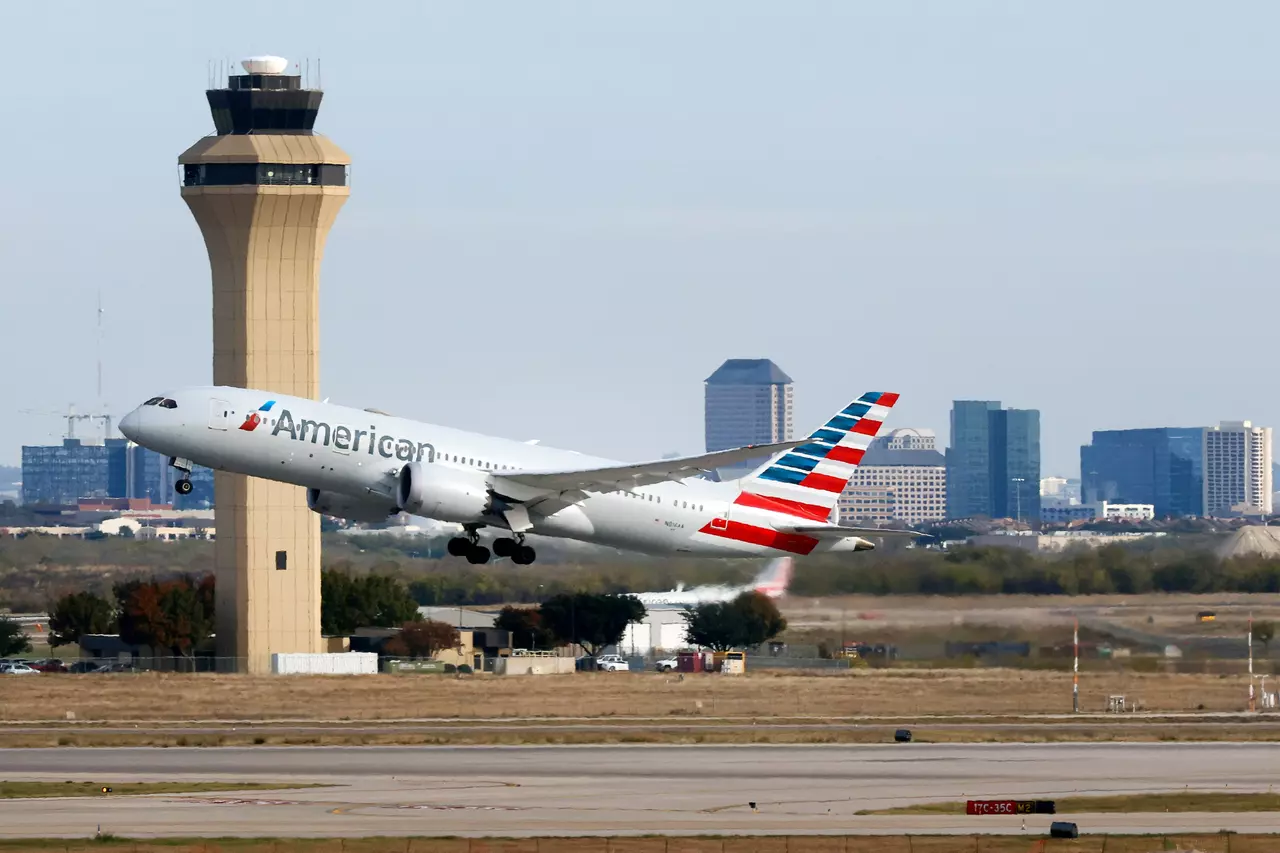
An American Airlines jet takes off past the control tower at DFW Airport on Nov. 27, 2023.
Tom Fox/The Dallas Morning News/TNS
American Airlines on Tuesday rolled out a scheduling change that it views as potentially transformative in its push to improve activity at Dallas-Fort Worth International Airport.
The airline, which is headquartered in Fort Worth, is adjusting its bank structure at its central hub from nine to 13 banks per day. According to American's Chief Operating Officer David Seymour, a bank structure is a scheduling mechanism where flights arrive, allow passengers to connect to other flights — and then depart.
Airlines use bank structures to schedule large groups of flights together, allowing carriers to coordinate arrivals, departures and connections. For American's customers at DFW, the schedule adjustment will mean more flights departing in highly desired time windows and less early morning departures to DFW.
The new bank structure allows American to spread flight traffic over a longer period of time throughout the day, creating less peaks, some of which were starting to exceed the capacity of the airport, Seymour explained. It will also give customers more time to connect to other flights.
"How do we make that experience a lot better without degrading what we offer as a carrier?" Seymour said in an interview with The Dallas Morning News. "This is our flagship hub. We want to make sure that we're offering all the same flights that we do to our customers. And so what we did is we looked at the structure and said, 'How do we level it out? ' "
American began considering the change last year, and its implementation comes just as the industry gears up for the busy summer travel season. Customers who don't fly frequently won't notice any effects from the scheduling change, according to Seymour.
American's scheduling efficiency at DFW is pivotal to its operation, since its performance has an impact on performance throughout the airline's network. American accounts for more than 80% of the market share at the airport each month, and the airline said in December that an average of 100,000 daily customers pass through the busy hub at its peak. American said it averages more than 930 peak daily departures here.
The changes will also benefit American's network nationwide, which heavily relies on the success of its DFW hub operation.
"Thirty percent of our connecting customers systemwide connect in DFW," Seymour said. "If I'm in Philadelphia, Miami, Chicago or Phoenix, I want to know how DFW is going to do."
He added that "making the investment here in DFW to improve its operation, make it more resilient, allow our customers to connect better, allow our team members or crew members to connect better has an outsized impact on the overall network."
Seymour also said the changes will improve foot traffic around the airport overall.
"The volume of travelers driving in to the airport will be muted and spread out over more time," he said.
"Theoretically you're going to have less congestion (on) International Boulevard, less volume at the toll booths, less volume going into the parking garages, less volume in the lobbies checking your bag, less volume at security checkpoints. And then if you're connecting customer, less volume as you transit from one flight to the next."
Seymour emphasized that the amount of flights or hours American operates at the airport isn't changing under the scheduling adjustment.
Another change American has made to its scheduling is adding more block time — the time between an aircraft leaving its gate and its departure city until it arrives at its destination — on flights to and from DFW and across its network.
The operational investments coincide with American's ongoing "crown jewel" project for Terminal F, in which the carrier has already invested $4 billion.
The new 31-gate terminal, which will be DFW's sixth, will be operated exclusively by American and will have its own ticketing and baggage claim. Terminals A and C are already undergoing construction to its piers, which will net more gates for American.