
Boston Mayor Wu’s climate action plan floats congestion pricing to discourage driving
Boston Mayor Michelle Wu’s climate action plan floats the potential for a congestion pricing system to discourage people from driving their personal cars into the city as one strategy to meet her net-zero emissions goal. Buried in the 110-page five-year climate action plan released by the city on Monday is a commitment from the mayor to study congestion pricing, which would impose a fee for ...
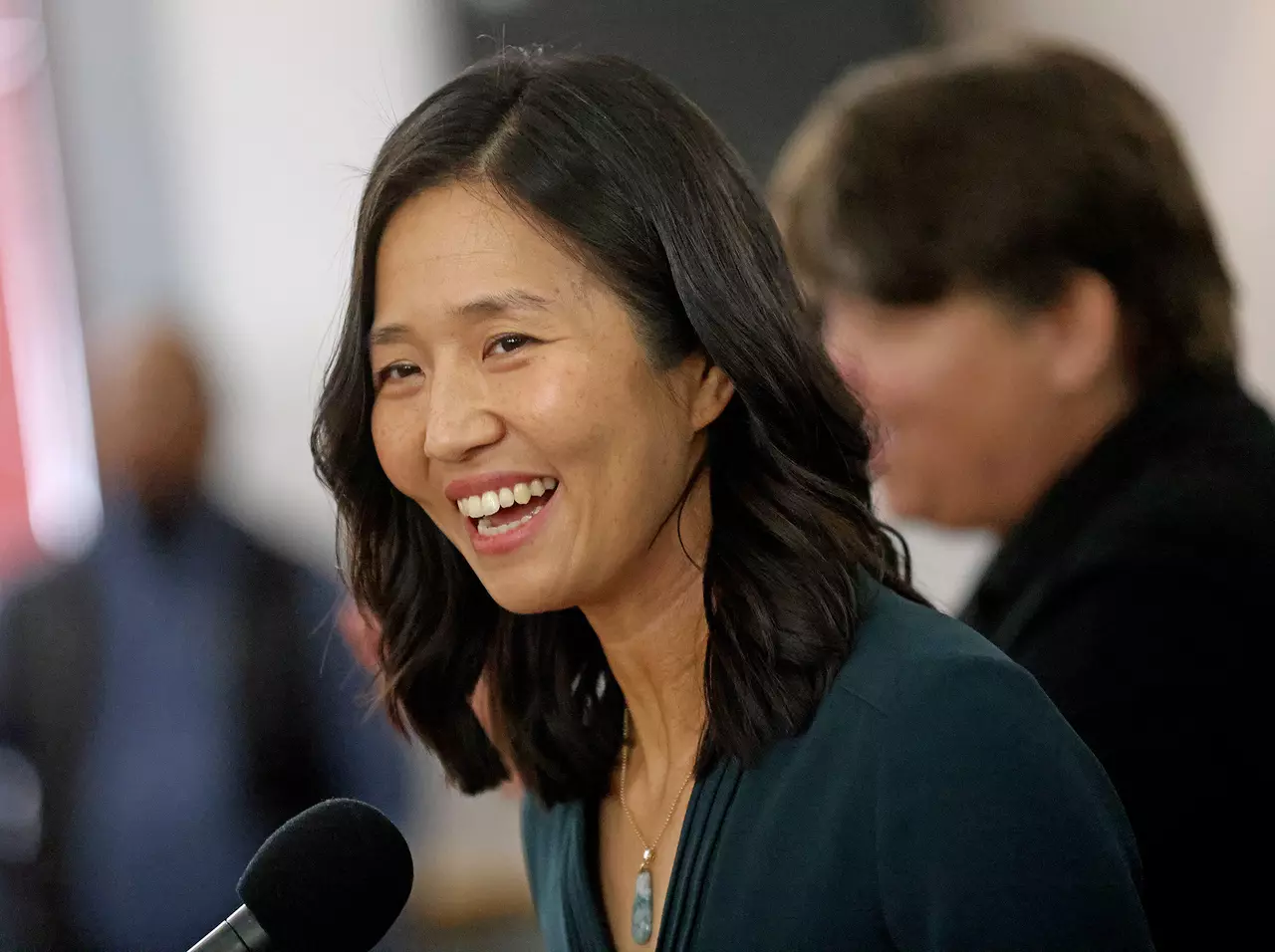
Boston Mayor Michelle Wu.
Matt Stone/Boston Herald/TNS
Boston Mayor Michelle Wu’s climate action plan floats the potential for a congestion pricing system to discourage people from driving their personal cars into the city as one strategy to meet her net-zero emissions goal.
Buried in the 110-page five-year climate action plan released by the city on Monday is a commitment from the mayor to study congestion pricing, which would impose a fee for drivers traveling into the Boston.
The controversial system aims to reduce traffic and was implemented in New York City in early 2025.
“The large volume of trips taken by private vehicles into the city of Boston congests our roads, renders bus service unreliable, and contributes to greenhouse gas emissions,” the plan states. “Incentivizing transportation choices aligned with the city’s climate and mobility goals is frustrated by the external nature of many of the costs imposed by individual decisions to drive.
“The city will study financial mechanisms to discourage vehicle trips into Boston, including updates to parking freeze permit fees, parking pricing structures, tolls and congestion-related fees. By examining these tools, the city can identify the most effective strategies for reducing congestion and encouraging more sustainable travel choices,” the plan states.
The potential new congestion fee drew swift criticism from Boston City Councilor Ed Flynn.
“The economy of Boston is struggling,” Flynn said in a statement to the Herald. “We have a major spending problem. It’s irresponsible for the City of Boston to increase taxes on residents or businesses. We must be fiscally responsible, fiscally disciplined, accountable and transparent.”
Congestion pricing is one of several strategies the climate plan lists for discouraging the use of gas-powered personal vehicles, which are criticized by the Wu administration for contributing to 91% of greenhouse gas emissions coming from transportation in the city. Transportation overall accounts for nearly a third of the city’s emissions, per the plan.
The climate plan also calls for street redesigns that are aimed at prioritizing the safety of pedestrians and cyclists; encouraging the use of public transportation through bus network and rail expansions, and reduced or free fares; and expanding access to electric charging infrastructure to encourage people to switch from gas-powered to electric vehicles, should they choose to continue to drive.
“While Boston’s primary transportation goal is to shift trips away from private vehicles and toward public transit, walking and biking, the city recognizes that cars will continue to play a role in mobility through 2030,” the plan states. “To reduce emissions from those vehicles, Boston is committed to making electric vehicles a practical and accessible choice.”
Discouraged driving is part of what the plan calls the city’s “bold and ambitious climate commitments,” which aim to achieve carbon neutrality by 2050. The Wu administration expects to meet 50% of that goal by 2030, when the plan ends.
“Boston has set bold and ambitious climate commitments that require dramatic changes in where our energy comes from, how our buildings work, and how people and goods move around the city,” the plan states. “In reaching carbon neutrality, it will be key to shift from fossil fuels to electricity from clean and renewable sources.”
The plan calls for continuing with the city’s net-zero emissions requirements for new construction that was implemented last year that critics say are disincentivizing housing production by proving to be too costly to developers.
It also states that the city aims to incentivize gas to electric stove conversions “to improve indoor air quality, lower energy costs, and reduce greenhouse gas emissions,” but recognizes that “upfront costs can create a barrier for many households.”
The plan mentions that Wu administration wants to develop and implement a citywide energy plan to discourage the use of third-party energy providers, for a “transition of the entire energy system toward cleaner, more efficient, and more reliable sources.”
It also highlights ways to protect the city from sea-level rise and extreme weather, such as the rise in 90-plus-degree days in the summer, and build a green workforce.
“Climate change is here today,” Wu said Monday at a press conference in East Boston. “Urban heat island is here today. We know that we need to prioritize this going forward, because unaddressed climate change is an existential threat to the city of Boston, and the future of our way of life.”
________