
Carl P. Leubsdorf: Trump’s war against Iran has been a disaster
However, and whenever, President Donald Trump’s war against Iran ultimately ends, this much is already clear: It’s been a disaster for the president, the United States and the global economy. Despite victory claims from some top U.S. officials and the substantial damage from American bombing, Iran’s fundamentalist regime remains in charge, its stockpile of nuclear materials presumably mostly ...
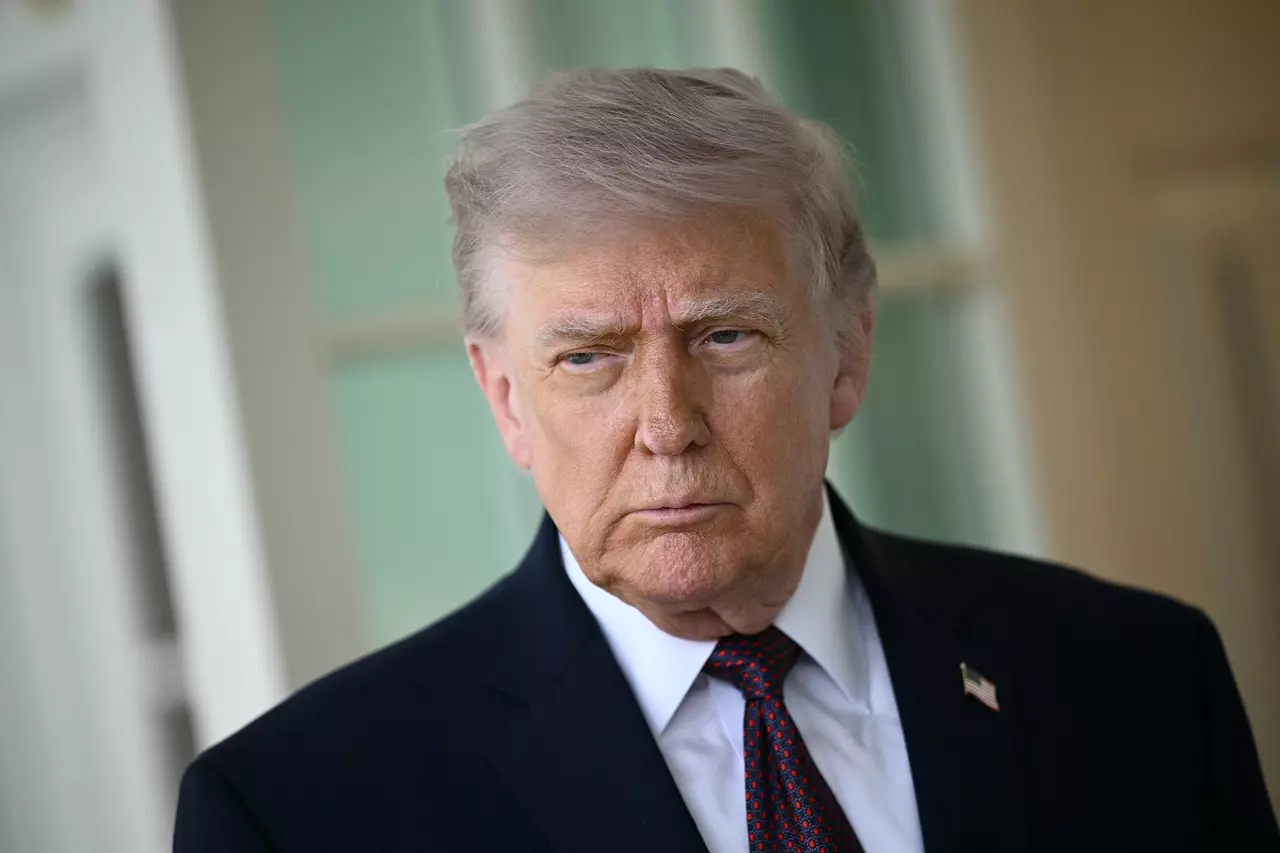
President Donald Trump speaks to the press outside the Oval Office at the White House in Washington, D.C., on April 13, 2026.
Brendan Smialowski/AFP/GETTY IMAGES NORTH AMERICA/TNS
However, and whenever, President Donald Trump’s war against Iran ultimately ends, this much is already clear: It’s been a disaster for the president, the United States and the global economy.
Despite victory claims from some top U.S. officials and the substantial damage from American bombing, Iran’s fundamentalist regime remains in charge, its stockpile of nuclear materials presumably mostly intact, its ability to wreak havoc at least partially so.
The failure of last weekend’s talks in Pakistan means the conflict will persist indefinitely, increasing the damage to all.
Meanwhile, Trump’s erratic behavior has shaken the Western alliance to the core. And his decision to blockade the Straits of Hormuz can only exacerbate the damage to the global economy that began with Iran’s decision to restrict oil exports.
Unsurprisingly, the administration would have you believe differently.
Last week’s cease-fire had no sooner taken effect than U.S. officials led by Trump and Secretary of Defense Pete Hegseth started to declare victory. But notably, they limited their claims to the narrower issue of military victory, as opposed to overall success.
“Operation Epic Fury was a historic and overwhelming victory on the battlefield, a capital V military victory by any measure,” Hegseth said. “Together with our Israeli partners, America’s military achieved every single objective.” White House Press Secretary Karoline Levitt also hailed the “capital V military victory.”
Even those claims are exaggerated. To be sure, weeks of incessant U.S. bombing destroyed Iran’s navy and overwhelmingly damaged its other military forces and industrial infrastructure. But Iran apparently retains enough operative missile launchers to remain a threat to America’s Persian Gulf allies, plus Israel.
More importantly, despite weeks of bombing and the earlier assault which Trump claimed “obliterated” its nuclear weapons, analysts say Iran retains enough fissionable materials to rebuild its nuclear weapons capacity over time.
And though Trump claims he has achieved “regime change” by displacing Iran’s ayatollah with his son and allegedly “more moderate” elements, that is almost certainly untrue. In fact, Israeli analysts say Iran’s new leaders are even more “hard line” than their predecessors.
The result has been neither the “unconditional surrender” Trump demanded nor the resounding Iranian defeat he has repeatedly claimed. The Iranians flatly rejected Vice President JD Vance’s demand they scrap all nuclear materials.
Indeed, they enjoy increased leverage from their willingness to block the Straits of Hormuz and demand toll payments — in crypto currency.
Their slowdown in shipments – and Trump’s subsequent embargo – may only slightly affect oil and gas availability in the United States. But their limits on global supplies caused oil prices everywhere to skyrocket and ensured U.S. gas prices would stay high.
Along with the president’s often haphazard application of increased tariffs, they will likely ensure a second year of lagging economic growth and prevent the reduction in inflation that would have allowed a cut in interest rates.
In fact, recently updated figures for the first year of Trump’s second term show annual growth was the lowest since the 2020 COVID pandemic. And the inflation rate has turned upward again after several years of decline.
But deceased growth and increased inflation are hardly the only domestic legacies of Trump’s misguided decision to forego diplomatic efforts and try to mitigate the long-standing Iranian threat by force.
Politically, the war’s unpopularity has increased the likelihood Trump’s Republicans will lose at least one house of Congress in November’s midterm elections. A spate of House GOP retirements indicates many Republicans expect that outcome, and a continued Democratic lead in generic vote projections shows they are probably right.
In addition, Democrats increasingly believe the same factors will enable them to flip the necessary four GOP seats to win control of the Senate.
Meanwhile, Congress faces a likely administration request for up to $100 billion in additional funding to pay for the war. GOP congressional leaders have been especially derelict in allowing Trump to undertake a massive overseas military commitment without exercising any legislative oversight, let alone enforce their constitutional authority to declare war.
Some Republican lawmakers have expressed doubts about funding the war. But this unusually obeisant Congress is unlikely to resist Trump’s retroactive entreaties to pay the troops and restore depleted U.S. weapons and ammunition stockpiles.
In some ways, however, the war may have a longer-term impact abroad than at home. After all, Americans will have a chance to vote this year to curb Trump’s administration and, two years hence, to displace it.
But even that may not reduce the long-term international fallout. Trump’s repeated criticism of U.S. allies for refusing to help in the war has further strained the Western alliance, and his recent threat to demolish Iranian civilization exacerbated doubts about his mental state.
The result is growing doubt among America’s closest allies whether they can still count on the United States as they have in the 80 years since the North Atlantic Treaty Organization was created.
While Trump lacks the authority to unilaterally withdraw the United States from NATO, European leaders are increasingly convinced they need to become more self-reliant to protect themselves against the threat from Russia.
And Trump’s tactics have increased these concerns in the six weeks since Trump, apparently spurred by Israeli Premier Benjamin Netanyahu, made the fateful decision to do militarily what prior presidents sought to do through diplomacy.
Not only has his effort failed, but it has weakened his presidency, his country, its alliances and the global economy.
____
_____