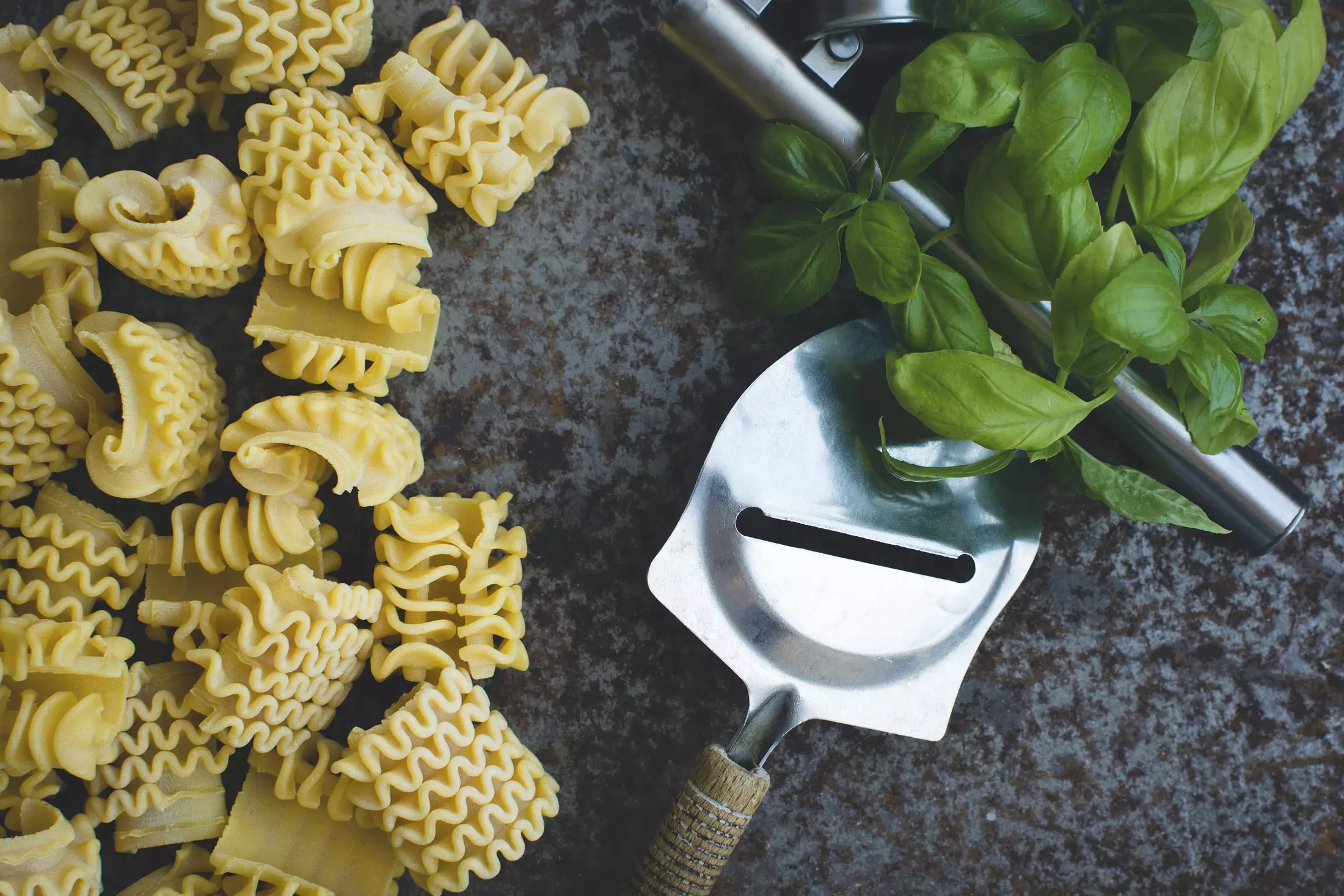

Everyone recognizes spaghetti, fettuccine and probably penne. But those clever Italians have come up with hundreds of pasta shapes, some of which you’ll just have to go to Italy to experience!
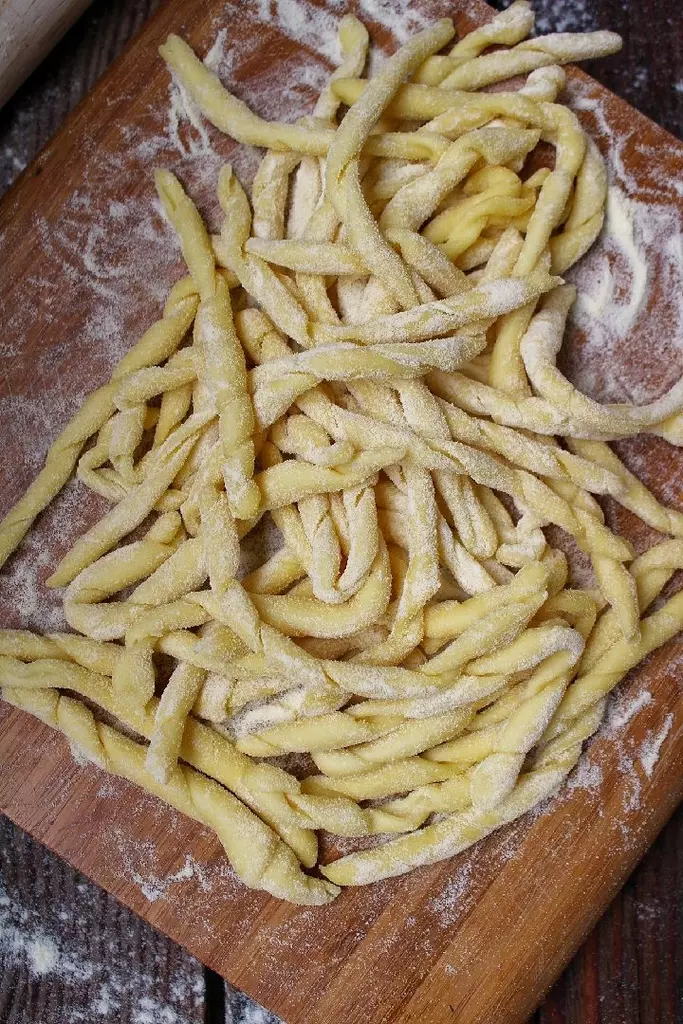
This spiral-shaped pasta holds sauces very well within its long twirls. Common in Sicily, this pasta is often made at home or purchased from a local, traditional pasta maker. The dough is rolled around a thin rod or pin called a tignuia. It’s often served with pesto, almond-based sauces or tomato-based sauces with seafood.
Photography: Pinterest/GZ Blog
Each piece of this flat, coin-shaped pasta is embossed with a wooden hand tool. Sometimes called corxetti, this pasta originated in northern Italy during the Middle Ages. While this pasta shape might not be readily available at your local grocery, it’s still produced in small batches near Genoa.
Photography: Wikimedia Commons/Alice Wiegand
Italian for bell flower, campanelle is shaped like a fluted cone with a ruffled edge. Its shape is perfect for holding little bits of meat or veggies. It’s sometimes used in casseroles.
This pasta is long like spaghetti, but it’s spiral shaped and has a hole running through the center! This hollow pasta was originally hand-rolled around a knitting needle to create its shape. It was developed in the Lazio region of Italy — an area that encompasses Rome.
Photography: Pinterest/Market Hall Foods via
This one, also known as reginette, has a long, narrow, ribbon shape with ruffled edges on each side. It comes from the Naples area of Italy and it is often used for hearty meat ragùs and creamy cheese sauces.
The name of this pasta translates roughly to peppercorns — a perfect name for these small, round orbs of pasta. Ancini di pepe is a great pasta shape for adding to soups.
This ruffly pasta shape is named after old-fashioned radiators. It’s often used in baked dishes with thick and chunky sauces, because the ridges and twists hold the sauce well.